Stay tuned for local news, weather, sports, and community events.
Listen Live 24/7 from anywhere with our online stream.
Check back soon for the latest headlines, contests, and station updates.

Oklahoma Farm Report

NASDA and NALC roll out new data on agricultural bankruptcy

This week, the National Association of State Departments of Agriculture and the National Agricultural Law Center announced the launch of Data on Economic and Bankruptcy Trends in Agriculture (DEBT), a data project that aims to provide a more comprehensive view of bankruptcy trends across the agricultural sector. The project compiles agricultural bankruptcy filings under both Chapter 11 and Chapter 12.
 
“A goal of our memorandum of understanding with the National Agricultural Law Center was to expand collaboration to inform agricultural policy and education,” NASDA CEO Ted McKinney said. “The DEBT project accomplishes exactly that by providing better data and a more complete picture of the economic conditions U.S. farmers are facing.”
 
“DEBT is a first step in gaining a definitive, foundational picture of agricultural bankruptcy filings in the U.S. from 2021 onward,” NALC Director Harrison Pittman said. “We look forward to collaborating with NASDA and others partners and stakeholders in building on this foundation.”
 
Historically, farms filing bankruptcies have been tracked through Chapter 12 filings, which is specifically designed for family farmers and family fishermen with regular annual income. It provides eligible farms with a process for reorganizing debt while continuing to operate. 
 
However, agricultural businesses might file under Chapter 11, a broad business reorganization chapter, when they do not qualify for Chapter 12 because of circumstances like off-farm incomes. Like Chapter 12, Chapter 11 allows the farm to continue operating while developing a plan to restructure and repay its debts.
 
This project examined bankruptcy filings from January 2021 through June 2026. To find farms that filed under Chapter 11 rather than Chapter 12, NASDA and NALC worked with long-time NASDA partner SAS, an advanced analytics company that turns data into usable information. Utilizing Public Access to Court Electronic Records (PACER), an online system allowing access to federal court files, case dockets and legal documents, SAS developed an automated process to cross-reference that information with publicly available data from the USDA Farm Service Agency. When an entity appeared in a bankruptcy filing and as a USDA Farm Service Agency program recipient, SAS used that as an indicator that the entity was an agricultural operation.
 
Of the 1,401 agricultural bankruptcy filings mapped, 201 were filed under Chapter 11. All 1,200 filings under Chapter 12 were counted, as a requirement to file for Chapter 12 protection is that the filing entity must be a farmer or fisherman.
 
Because not all farms participate in USDA Farm Service Agency, the Chapter 11 results may not capture every agricultural operation that filed under that chapter. However, by compiling agricultural bankruptcy filings across both chapters, the DEBT project provides a more comprehensive view of trends across the agricultural sector.
 
The data can help identify changes over time, geographic patterns and emerging financial challenges affecting agricultural operations. These filings can offer a clearer picture of the financial realities facing U.S. agriculture for attorneys, policymakers, researchers, lenders and others seeking to understand and respond to those challenges. Learn more about the project, methodology and findings at https://nationalaglawcenter.org/debtproject/.

The post NASDA and NALC roll out new data on agricultural bankruptcy first appeared on Oklahoma Farm Report.


Drummond fights to return Inola smelter case to state court

Attorney General Gentner Drummond is asking a federal court to send his lawsuit over the proposed Inola aluminum smelter back to Rogers County District Court. He is also asking the court to order the defendants to pay the State’s costs and attorney fees for improperly removing the case.

In a filing with the U.S. District Court for the Northern District of Oklahoma, Drummond argues that every element of the State’s claims comes from Oklahoma law, and that the federal court therefore has no jurisdiction over the case.

“My responsibility as Attorney General is to defend Oklahomans and enforce the laws of this state,” Drummond said. “I will not allow these corporations to use federal court as a means to evade Oklahoma law or delay our efforts to protect the people, livestock and natural resources of Rogers County. This case belongs in Oklahoma state court, under Oklahoma law, and I will continue fighting to ensure it is decided there.”

Drummond’s filing argues that binding precedent from the U.S. Court of Appeals for the Tenth Circuit makes clear that a federal defense, including an argument that federal law preempts state law, cannot provide a basis for removing a state-law case to federal court. The defendants themselves have acknowledged they are not arguing that the federal Clean Air Act completely preempts the State’s claims. Because that rule is settled, the filing argues, the defendants had no objectively reasonable basis to remove and should bear the costs they caused.

“The law on this issue is clear, and the defendants had no reasonable basis to drag this case into federal court,” Drummond said. “Oklahoma taxpayers should not be left footing the bill for an unnecessary legal detour. We are asking the court to send this case back where it belongs and hold the defendants responsible for the costs they created.”

Drummond initially filed a petition in June to stop development of Oklahoma Primary Aluminum, a massive proposed smelter near Inola. Drummond’s lawsuit seeks to protect the health of area residents, livestock and natural resources from the threatened public nuisance posed by the project. The defendants subsequently removed the case to federal court on July 21.

Drummond also has a pending motion for preliminary injunction seeking to block construction of the proposed smelter while the lawsuit is decided.

Read the filing.

The post Drummond fights to return Inola smelter case to state court first appeared on Oklahoma Farm Report.


EPA, in Consultation with DOE, Expands Gasoline Supply to Lower Prices at the Pump

Today, U.S. Environmental Protection Agency (EPA) Administrator Lee Zeldin, in consultation with U.S. Department of Energy (DOE) and in accordance with the Clean Air Act (CAA), issued a temporary emergency fuel waiver that will increase the nation’s gasoline supply and help lower prices for American families.

Beginning on September 1, 2026, EPA’s waivers will allow the sale of E10, gasoline blended with 10 percent ethanol, at a higher Reid Vapor Pressure (RVP). This action will increase the domestic gasoline supply by hundreds of thousands of barrels per day by effectively ending the summer-blend gasoline requirement early. With the increase of domestic gasoline supply on the market, Americans can expect to see reduced gas prices. As required by the CAA, EPA and DOE evaluated the current situation and determined that granting the waiver was in the public interest.

“President Trump has prioritized ensuring American families have affordable gasoline and energy. Throughout this administration, EPA has taken decisive action like issuing RVP waivers to provide relief at the pump and fortify our gasoline supply chain,” said EPA Administrator Lee Zeldin. “Today, we continue this work with our federal partners to increase supply and lower gas prices for all Americans. Across the administration, we will continue to execute President Trump’s agenda and provide Americans with a prosperous and affordable nation.”

“Increasing the supply of gasoline means lower prices for American families,” said DOE Secretary Chris Wright. “Today’s action is another example of this Administration using every available tool to cut red tape, increase the supply of gasoline, and lower prices at the pump. Thanks to President Trump’s leadership, we are advancing commonsense policies that prioritize energy addition and put the American people first.”

EPA remains committed to securing a robust fuel supply and lowering costs for American families, farmers, and manufacturers by reducing reliance on imported fuels and strengthening U.S. energy independence through commonsense rulemaking. The agency is issuing today’s waiver notice in advance to give industry adequate time to transition its fuel distribution systems.

Today’s actions will remain in place through the end of the summer control season on September 15, 2026. The action also waives state level controls in Texas, Arizona and California that extend beyond September 15, 2026, for the maximum period allowed of 20 days. As the EPA has done all summer, we will be monitoring gasoline supplies in those states and will be prepared to extend the waiver through a subsequent action as long as necessary to ensure adequate supplies of gasoline to consumers. 

Since May 1, 2026, EPA’s emergency fuel waivers have been in effect to remove fuel restrictions across the country. The agency’s action has lowered gas prices in the states that have followed EPA’s suit and waived their requirements. In stark contrast, blue-state politicians in New York and California have not adopted these standards, driving up prices for their own residents. The agency will be ready to extend the emergency fuel waivers as long as the fuel supply circumstances warrant such action.

For more information on this announcement, please visit EPA’s Fuel Waivers webpage. 

The post EPA, in Consultation with DOE, Expands Gasoline Supply to Lower Prices at the Pump first appeared on Oklahoma Farm Report.


Wheat Market Rallies Face Resistance as Weather and Geopolitical Factors Collide

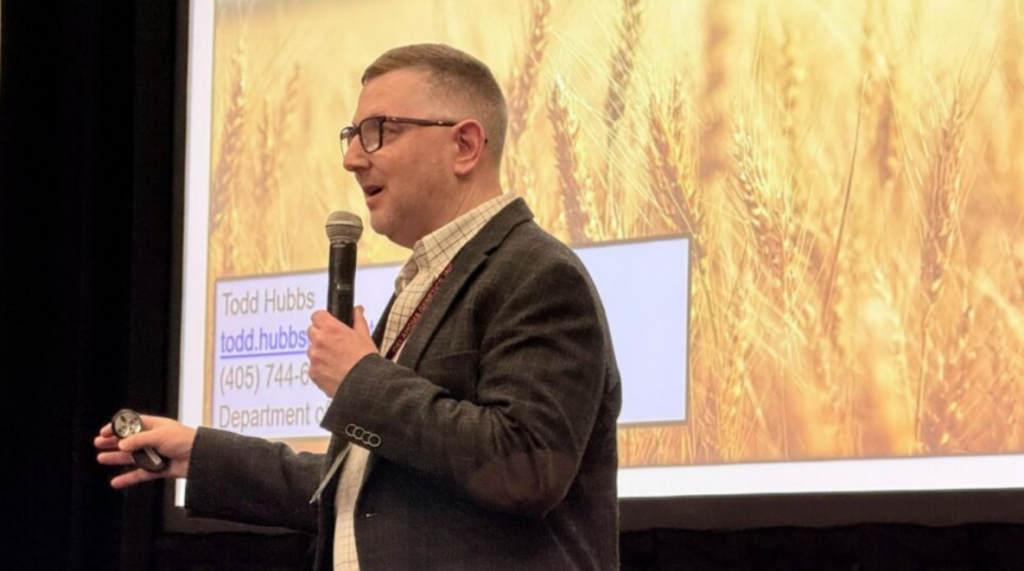
Grain markets have recently posted solid gains across wheat, corn, and soybeans, yet hard red winter (HRW) wheat futures continue to battle technical resistance. Farm Director KC Sheperd recently sat down with Oklahoma State University Extension crop marketing specialist Todd Hubbs to analyze how weather conditions, Black Sea trade dynamics, and global supply levels are shaping wheat market opportunities.

Black Sea Logistics and Pricing Headwinds

Recent rallies in the wheat complex have been fueled largely by North American weather concerns and the ongoing conflict in the Black Sea region. However, HRW futures have struggled to break through the $7.80 resistance level.

According to Hubbs, grain from the Black Sea region is still moving into the global marketplace despite shipping challenges:

Ukraine continues to reroute grain supplies through Moldova and Romania via the port of Constanta.

Russia is redirecting shipments through deep-sea ports when accessible.

Port prices for European and Black Sea wheat remain significantly cheaper than HRW wheat out of the U.S. Gulf.

Because of this price spread, U.S. export demand has not accelerated to fill global gaps, keeping a lid on extended rallies even with a smaller domestic crop.

Global Demand and Cash Basis

International buyers, particularly in North Africa and the Middle East, have shown limited urgency in tenders after securing solid local harvests and carrying in adequate stocks. Many major importing nations are actively resisting higher prices in hopes of market pullbacks.

In the Southern Plains, cash basis levels remain steady and aligned with historical norms. The forward curve continues to show carry in the HRW market, with cash bids in Oklahoma generally sitting between $7.10 and $7.20 against nearby futures in the $7.70 to $7.80 range.

Planting Decisions Under Severe Drought

Hot, dry conditions across Oklahoma are creating difficult planting decisions as producers evaluate the upcoming crop year.

Pricing Ahead: Hubbs noted that next July’s new-crop prices offer attractive levels for farmers with adequate crop insurance coverage (75% to 85%), though high production risk due to severe drought makes forward pricing difficult.

Dual-Purpose Grazing: Due to scarce hay supplies across the region, dual-purpose wheat remains an appealing strategy for many operators.

Spring Crop Signals: Market direction will heavily depend on final yields for U.S. spring crops—especially corn—as well as upcoming Southern Hemisphere production in Australia under developing El Niño patterns.

Hubbs concluded that breaking through the $7.80 technical barrier in nearby and December contracts will be critical to establishing stronger upward momentum across the entire forward curve.

The post Wheat Market Rallies Face Resistance as Weather and Geopolitical Factors Collide first appeared on Oklahoma Farm Report.


R-Calf Weekly Address: Domestic Beef Supply Chain on Road to Ruin

Over the past three years, the quantity of beef produced from domestic cattle decreased year-over-year while domestic beef consumption increased year-over-year. This is Exhibit 1, demonstrating severe market failure in the downstream, beef side of the supply chain.

During that same period, the U.S. beef cow inventory declined year-over-year, occurring again at the same time domestic beef consumption was increasing year-over-year. This is Exhibit 2, demonstrating severe market failure in the upstream, cattle side of the supply chain.

During that same period, the price of both retail beef and the price of cattle increased year-over-year, again occurring at the same time the U.S. beef cow inventory was declining year-over-year. This is Exhibit 3, demonstrating a severe disconnect between the upstream cattle side and downstream beef side of the supply chain.

Also during that same period, the beef side of the supply chain imported all-time record-high quantities of beef – from both the beef commodity and the beef equivalent of imported cattle, and this again occurred at the same time that both retail beef prices and cattle prices were increasing year-over-year. This is Exhibit 4, demonstrating a severe upending of the economic law of supply and demand (i.e., as beef supplies increased, there should have been a corresponding decrease in retail prices).  

And also during that same period, the average monthly retail beef margin increased year-over-year while the average monthly wholesale or beef packer margin decreased year-over-year. This is Exhibit 5, demonstrating that the decades-long, positive relationship between retail margins and wholesale margins has been severed and retailers have been capitalizing on the dysfunctional downstream beef side of the supply chain. 

And, finally, for our three-year analysis, the volume in the fed cattle cash market decreased year-over-year, leaving the industry’s critical price-discovery market at an all-time low while the beef packers’ captive supplies reached an all-time high in 2025. This is Exhibit 6, demonstrating that while packing capacity remained unchanged during the previous three years, the beef packers had maximized their control over the available fed cattle supply when we entered 2026.

Let’s recap the anomalies that transpired along the beef supply chain during the three years immediately preceding 2026. For the upstream cattle side of the supply chain, we had rising cattle prices and falling beef cow numbers. On the downstream beef side of the supply chain, we had rising beef consumption, rising beef prices, and falling beef production. From within the downstream beef side of the supply chain, we had historically high import volumes that correlate with rising retail margins and falling beef packer margins. And finally, at the intersect between the upstream cattle industry and downstream beef industry, we have the beef packers maximizing their control over available cattle supplies through record captive-supply arrangements. 

Now this year, in 2026, we’re witnessing a radical restructuring where the downstream beef industry intersects with the upstream cattle industry.

The Big Three packers took aggressive action to solidify their control over the available fed cattle supply by shuttering several plants. This will enhance the largest packers’ leverage over cattle prices by enabling them to manage their capacities at levels that do not exceed the available supply of fed cattle. And because the largest packers are retreating from outlying areas, their plants will be anchored where cash markets are exceedingly thin, giving them even more leverage over their predominant captive supplies. These actions will impede domestic herd expansion as it signals to producers that the packers intend to increase their control over cattle supplies.

In addition, we’re witnessing a radical shift on the part of the downstream beef industry as it transitions away from its historical reliance on the upstream domestic cattle industry to meet beef consumption. In the first half of 2026, beef production from domestic cattle continued to decline while imports continued to increase. Imports in the first half of 2026 represented nearly 30% of the beef produced from domestic cattle. America’s dependency on foreign beef has never been greater, and this foreign beef is not only displacing domestic production, but it is also disincentivizing domestic herd expansion.     

Record beef imports while beef cow numbers are historically low helps explain why retail margins are increasing while packer margins are decreasing. Sadly, rather than incentivizing the rebuilding of the decimated U.S. cattle herd, the downstream beef industry is instead serving its own self-interests by restructuring and reengineering themselves to maximize their profitability in this new paradigm.

The government needs to intercede before we reach the point of no return. Mandatory country-of-origin labeling is essential. Import controls are desperately needed, and Packers and Stockyards and antitrust enforcers must engage to restore a competitive marketplace for America’s cattle producers.

The post R-Calf Weekly Address: Domestic Beef Supply Chain on Road to Ruin first appeared on Oklahoma Farm Report.


USMCA Renewal Is an Opportunity to Strengthen Agriculture

Strong markets are essential to a strong farm economy. And for America’s farmers and ranchers, few markets matter more than our neighbors to the north and south. That’s why the ongoing review of the U.S.-Mexico-Canada Agreement is so important to agriculture.

Next month, U.S. and Mexican officials will meet for another round of negotiations as part of the agreement’s six-year review. These negotiations carry real consequences for farmers and ranchers. The decisions made at the table will help shape the future of agricultural trade across North America and determine whether America’s farmers and ranchers have the certainty they need to compete and grow. At a time when farm families are facing the toughest economy in a generation, protecting and expanding access to reliable markets has never been more important.

Canada and Mexico Are Essential Markets for U.S. Agriculture

Canada and Mexico have long been America’s closest agricultural trading partners. Together, they purchase nearly one-third of our agricultural exports. Every day, trucks and railcars move American-grown food across our borders, supporting farmers, ranchers and rural communities.

Last year alone, American farmers exported nearly $31 billion in agricultural products to Mexico and nearly $29 billion to Canada. Those numbers represent critical markets for the crops we grow and the livestock we raise, giving farmers and ranchers greater confidence to invest in their farms and plan for the future.

Strong trade relationships with Canada and Mexico help strengthen family farms, support rural communities, and keep American agriculture competitive around the world.

The benefits extend well beyond the farm gate. Every dollar in agricultural exports to Canada and Mexico generates roughly two dollars in economic activity here at home, supporting jobs in transportation, processing, manufacturing and the many other businesses that help move American-grown products to consumers.

USMCA Renewal Can Expand Agricultural Market Access

When USMCA took effect in 2020, it strengthened an already important trade relationship between the United States, Canada and Mexico. The review now underway gives all three countries the opportunity to build on what has worked while addressing challenges that still exist.

Farm Bureau supports renewing USMCA because farmers need certainty, but we also believe this is an opportunity to strengthen the agreement. That includes improving market access for U.S. dairy products and creating meaningful protections against seasonal produce import surges that can disrupt markets for U.S. fruit and vegetable growers.

Farmers don’t make decisions just one season at a time. They invest months and often years before a crop is harvested or livestock is marketed. Those decisions require confidence that markets will be there when it’s time to sell.

As negotiations continue, Farm Bureau will keep advocating for an agreement that strengthens opportunities for America’s farmers and ranchers. Strong trade relationships with Canada and Mexico help strengthen family farms, support rural communities, and keep American agriculture competitive around the world.

The post USMCA Renewal Is an Opportunity to Strengthen Agriculture first appeared on Oklahoma Farm Report.


OBBBA Levels the Playing Field for Different Farm Business Structures for USDA Payment Limitations

Authors Yangxuan Liu and Michael R Langemeier write in Southern Ag Today: The One Big Beautiful Bill Act (OBBBA) changes how U.S. Department of Agriculture (USDA) payment limitations apply to different farm business structures. On June 2, 2026, USDA released the final rule (link) explaining how this provision will be administered beginning with the 2026 program year.

Prior to passage of OBBBA, business structure affected the number of payment limitations an operation could receive. General partnerships and joint ventures were permitted to multiply the applicable payment limitation by the number of eligible partners. In contrast, a Limited Liability Company (LLC) or S corporation was generally treated as a single legal entity—and limited to a single payment limitation—regardless of the number of members actively engaged in the farming operation. As a result, many producers organized as general partnerships to preserve eligibility for multiple USDA payments, despite the additional personal liability associated with that business structure. This disparate treatment of entities was highlighted in a previous Southern Ag Today article (link) by Ferrell, Lashmet, and Fischer (2024).

To address this imbalance, OBBBA established the Qualified Pass-Through (QPT) Entity classification (Table 1). Eligible QPT entities include Partnerships, Joint ventures, S corporations, and LLCs that are not taxed as C corporations. Beginning with the 2026 program year, QPT entitiesmay qualify for USDA payment limitations based on the number of eligible members, provided each member satisfies USDA eligibility requirements, including the actively engaged in farming provisions. Now, Qualified Pass-Through LLCs and S corporations are treated similarly to general partnerships and joint ventures for USDA payment limitation purposes.

Table 1. Payment Limitations for Qualified Pass-Through (QPT) Entities Before and After the One Big Beautiful Bill Act (OBBBA).

As noted in Table 1, for LLCs that elect to be taxed as C corporations, the payment limitation remains unchanged. These entities continue to be limited to one payment limitation per entity.

The new QPT entity provisions are effective for the 2026 program year. As a one-time exception, for the 2026 program year, USDA will determine an operation’s business structure based on its organization status as of September 15, 2026. Beginning with the 2027 program year, the business structure determination date will revert to the standard June 1.

Example

Consider a family farming operation owned by four siblings, all of whom meet USDA’s eligibility requirements. Table 2 summarizes the changes in payment limitations under different business structures for this family operation before and after OBBBA.

Under the 2026 payment limitation of $164,000 per eligible person for the Agriculture Risk Coverage (ARC) and Price Loss Coverage (PLC) programs, a family farm operating as a QPT LLC or S corporation may increase its maximum USDA payment eligibility from $164,000 to $656,000, while retaining the liability protection offered by these business structures. Importantly, while the changes in OBBBA make each member of this farm eligible for their own separate payment limitation, it does not guarantee a payment. Payments are still a function of losses incurred.

Table 2. Payment Limitation Changes for a Family Farming Operation with Four Siblings Before and After the One Big Beautiful Bill Act (OBBBA)

*LLCs that are not taxed as C corporations.

Why Does This Matter?

The new rules have the potential to substantially increase total USDA program payments for eligible farms organized as QPT LLCs or S corporations. USDA programs include ARC, PLC, and certain USDA disaster assistance programs.

Perhaps more importantly, producers no longer must choose between maximizing USDA program benefits and obtaining the liability protection offered by an LLC or S corporation. This new QPT entity treatment gives eligible operations greater flexibility to organize their business structures to meet liability protection, legal, tax, succession, and management objectives while maintaining eligibility for multiple payment limitations under USDA programs.

Disclaimer: This article is for educational and informational purposes only. Because every operation is unique, producers are encouraged to consult with their attorney, accountant, and crop insurance agent before making any changes.

Additional Information:

Ferrell, Shannon L., Tiffany Dowell Lashmet, and Bart L. Fischer. “Paved with Good Intentions: Unintended Impacts of Farm Bill Payment Limitations.” Southern Ag Today 4(19.4). May 9, 2024. 

Federal Register. Payment Limitation and Payment Eligibility. Department of Agriculture, Commodity Credit Corporation, 7 CFR Part 1400, [Docket ID FSA-2026-0100], RIN 0560-AI86. June 2, 2026. https://www.federalregister.gov/documents/2026/06/02/2026-11002/payment-limitation-and-payment-eligibility (accessed July 23, 2026).

Kristine A. Tidgren. USDA Issues New Payment Limitation and Eligibility Rules. Center for Agricultural Law and Taxation. Iowa State University. June 4, 2026. https://www.calt.iastate.edu/post/usda-issues-new-payment-limitation-and-eligibility-rules (accessed July 23, 2026).

U.S. Department of Agriculture, Farm Service Agency. Payment Limitations. https://www.fsa.usda.gov/tools/informational/payment-eligibility/payment-limitations (accessed July 23, 2026).

Liu, Yangxuan, and Michael R Langemeier. “OBBBA Levels the Playing Field for Different Farm Business Structures for USDA Payment Limitations.” Southern Ag Today

The post OBBBA Levels the Playing Field for Different Farm Business Structures for USDA Payment Limitations first appeared on Oklahoma Farm Report.


AFIA Welcomes New Manager of Global Policy

The American Feed Industry Association (AFIA) is pleased to welcome Abigail Tierney as manager of global policy. In this position, Tierney will educate policymakers, represent the AFIA in trade discussions and advocate for science-based regulations to reduce non-tariff barriers. She will also represent the U.S. animal food industry at meetings both domestically and internationally, analyze global trade trends and develop tools to support industry members.

“Abby brings an impressive combination of trade policy, regulatory and international affairs experience that will strengthen AFIA’s global advocacy efforts,” said AFIA Chief Policy Officer Leah Wilkinson. “Her background across federal agencies and firsthand experience advancing U.S. agricultural interests will be invaluable as the AFIA works to expand market opportunities, address trade barriers and promote science-based policies that support the competitiveness of the U.S. animal food industry for our members. We are thrilled to welcome Abby to the AFIA team.”

Prior to joining the AFIA, Tierney managed global policy at the Environmental Protection Agency, where she also represented the United States on the environmental policy committee of the Organisation for Economic Co-operation and Development. Before her time at the EPA, Tierney worked for the U.S. Department of Agriculture Foreign Agricultural Service, first directing international market development programs and later advancing U.S. animal trade policy. Tierney began her career as a Peace Corps agribusiness volunteer in Panama from 2017-19.

Hailing from Kansas City, Kan., Tierney holds a bachelor’s degree in business administration in international business from Saint Louis University and now calls Washington, D.C., home.

The AFIA looks forward to the contributions of Tierney to help strengthen the U.S. animal food industry’s global relationships.

Editorial Note: To obtain a high-resolution image to use for editorial purposes, contact Margo Nagle, AFIA’s communications specialist.

The post AFIA Welcomes New Manager of Global Policy first appeared on Oklahoma Farm Report.


Save the Date: Legislative Fly-In September 14-16

NFU’s Legislative Fly-In will be happening in Washington, D.C., in just one month! Farmers Union members from across the country will gather in the nation’s capital to meet with lawmakers and advocate for legislative priorities.   Are you attending the Fly-In? Join us on September 2nd from 3-4 p.m. ET for a prep webinar with our government relations team, who will discuss what to expect and how to prepare for this year’s event. We encourage all Fly-In attendees to join. Register for the webinar here.   Can’t join us this year? No problem! We’ll soon share some opportunities for you to join the effort and get involved from your farm.  
NextGen Social on Sunday, September 13   Join Farmers Union Next Generation members (ages 21-45) for an evening of fun and games! Come reconnect with old friends and make new ones from across the country while enjoying delicious food, drinks, and bocce.    This event will take place at Pinstripes in Georgetown from 5 to 8 p.m. on Sunday, September 13, before NFU’s Legislative Fly-In kicks off. Please RSVP here if you are planning to attend.
For more information about Fly-In, go to nfu.org/fly-in.

The post Save the Date: Legislative Fly-In September 14-16 first appeared on Oklahoma Farm Report.


Regenerative Agriculture Focuses on Resource Use and Efficiency in the Feedlot

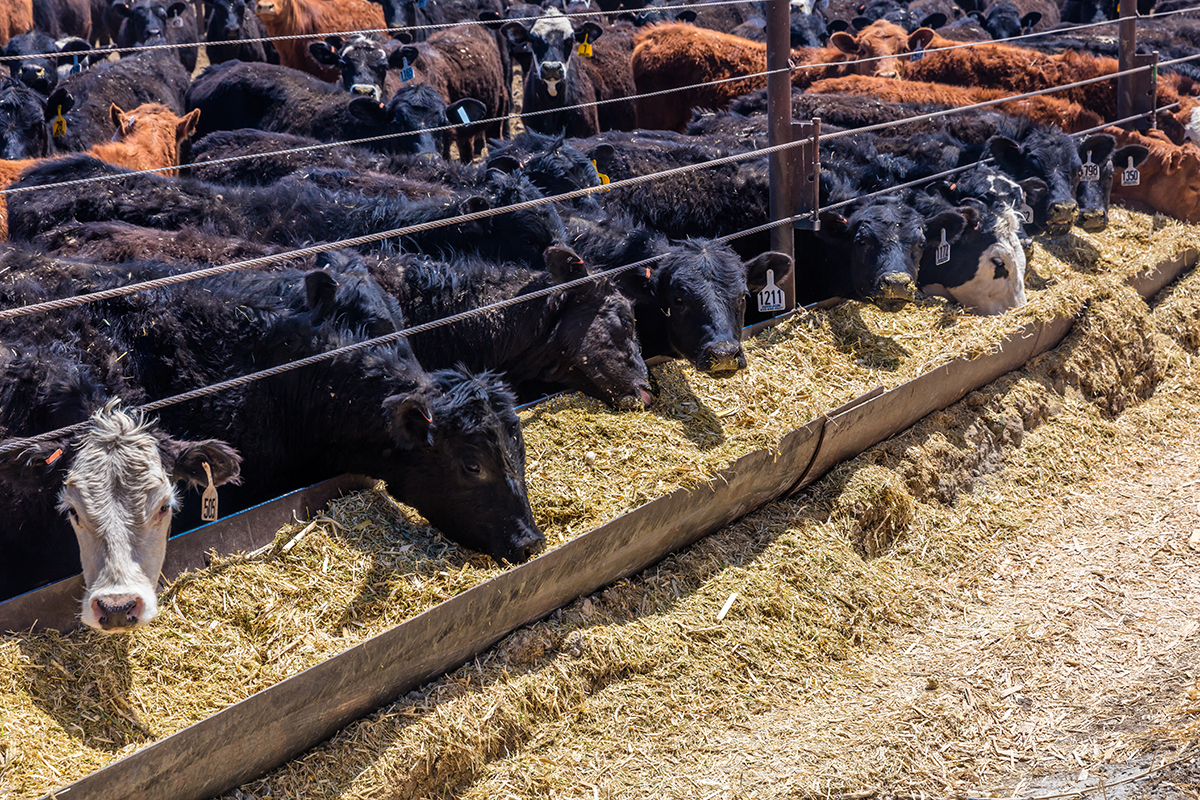
In today’s Beef Buzz, senior farm and ranch broadcaster Ron Hays features comments from Tom Fanning, general manager of Pratt Feeders, who recently discussed regenerative agriculture and its connection to the cattle industry on the Angus at Work podcast. Fanning focused specifically on how regenerative agriculture applies at the feedlot level, explaining how cattle feeders can improve the natural resources they depend on while maintaining an economically viable production system.

A Four-Legged Approach to Regenerative Agriculture

Fanning says regenerative agriculture in the beef industry is about improving the natural resources producers depend on while maintaining economic viability. “To me, regenerative ag in farming and ranching is focused on restoring and improving natural resources,” Fanning says. “Production depends upon our soil, our water, our biodiversity, our ecosystem, making sure those things function while remaining economically viable.”

At the feedlot level, Fanning sees four key areas where cattle feeders can make an impact: manure, water, animal performance, and data and technology. “The manure that we create every day is a resource that goes back onto the farm grounds that we’re then pulling the crops back off of to use back into the feed yard,” he says.

Fanning also emphasizes water efficiency and the importance of maintaining clean water for cattle performance. “Clean water is one of the most important factors to having a strong performance in animals in their gain,” he says. “But we need to preserve those water aquifers and the resources that we have.”

Manure Creates a Closed Loop

Cattle produce manure every day, and Fanning says feedlots can put that resource back to work on farms.

At Pratt Feeders, some lagoon water and dry manure are applied to farm ground, while much of the manure is used by surrounding farmers as a fertilizer substitute. “It provides a lot of nutrients back into the soil, and then we’re able to then be a market for them to sell their products back to us once they produce those off that farm,” Fanning says.

He describes the process as a “closed loop,” with manure returning nutrients to the soil and crops eventually making their way back into the cattle feeding system. Fanning also says the operation has several composting facilities where manure is composted before being returned to farms.

Healthier Cattle Can Improve Efficiency

Fanning says animal health and performance are another important piece of regenerative agriculture because more efficient cattle require fewer resources per pound of gain. “Healthier cattle equals better feed efficiency and lower morbidity or lower pulls is lower resource use per pound of gain,” he says.

Technology is also giving feedlot managers new ways to monitor individual animals. Fanning says Pratt Feeders is testing several technologies that collect data on animal movement and activity throughout the day.

The goal is to identify potential health problems earlier and allow employees to intervene with individual animals. “We’re really not trying to replace people with data,” Fanning says. “We’re just trying to let data talk to our professionals and help them make better judgments than with more information.”

He says that could mean having a list early each morning identifying specific pens where cattle need to be checked.

Genetics and Individual Animal Management

Fanning says cattle arriving at today’s feedyards are the result of years of decisions made throughout the beef production system. “Having the right animals that fit the right environments, and you know the proper genetics, and you know all of those decisions that are being made downstream of the feed yard by your seed stock producers and your commercial cow calf operators,” he says.

Fanning says feedlots benefit from those decisions and then work to get the best possible outcome from each individual animal. “Our job is then to take those animals and to get the optimum outcome for each animal there—not the pen, but the individual animal,” he says.

That focus has led to greater use of DNA testing and sorting programs, which Fanning says help feeders better understand what individual cattle are capable of achieving. “We’re trying to strive for individual animal management and the marketing and hitting that individual animal’s endpoint,” he says.

Larger Cattle Are Showing Their Potential

Fanning says cattle genetics and improved management have changed the way feeders think about optimal marketing weights. “In the past, we didn’t allow the animals to get to their optimum endpoint,” he says. “We sold them when we thought they were ready.”

He says that has changed significantly over the past four to five years as producers have seen cattle continue to gain and convert efficiently at heavier weights. “The genetics and the ability of those animals to gain and convert efficiently at much bigger weights is just—it’s just been proven out over and over and over,” Fanning says.

Fanning’s full conversation on regenerative agriculture and the cattle industry can be heard on the Angus at Work podcast.

The Beef Buzz is a regular feature heard on radio stations around the region on the Radio Oklahoma Ag Network and is a regular audio feature found on this website as well. Click on the LISTEN BAR above for today’s show and check out our archives for older Beef Buzz shows covering the gamut of the beef cattle industry today.

The post Regenerative Agriculture Focuses on Resource Use and Efficiency in the Feedlot first appeared on Oklahoma Farm Report.


Weather

KOOL 105.5 Now Playing (example)

Upcoming Events

Visitor Polls

Do you like the new website?
Add a Comment
(Fields are Optional)

Your email address is never published.